InSpiritInTruth
Brought personalisation to the devotional — a format that has not changed in decades — and engineered it so that an app quoting scripture can never quietly misquote it.
InSpiritInTruth is a devotional app for imperfect journeys — the overwhelmed, the curious, the unchurched, the devoted. The daily devotional format has looked the same for generations: one text, written for everyone, read alone. ISIT keeps that shared rhythm and adds something the format has never had — a devotional written for exactly what you are carrying today.
A format that never changed
The devotional is one of the oldest content formats there is: a passage, a reflection, a prayer, the same page for every reader. That sameness is part of its comfort — and its limit. The person navigating faith outside church walls, the one struggling to stay consistent, the one carrying something specific today: the format has never been able to meet any of them where they actually are.
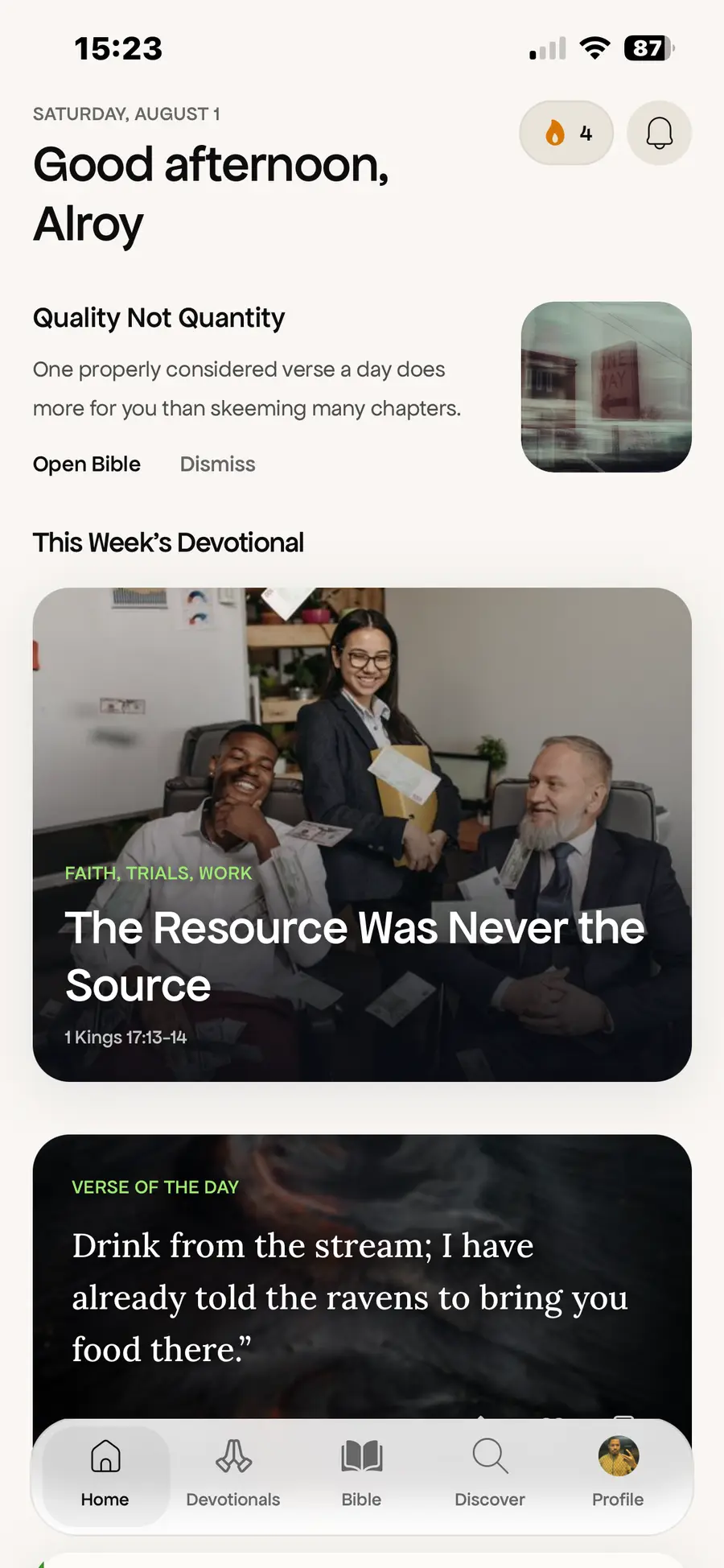
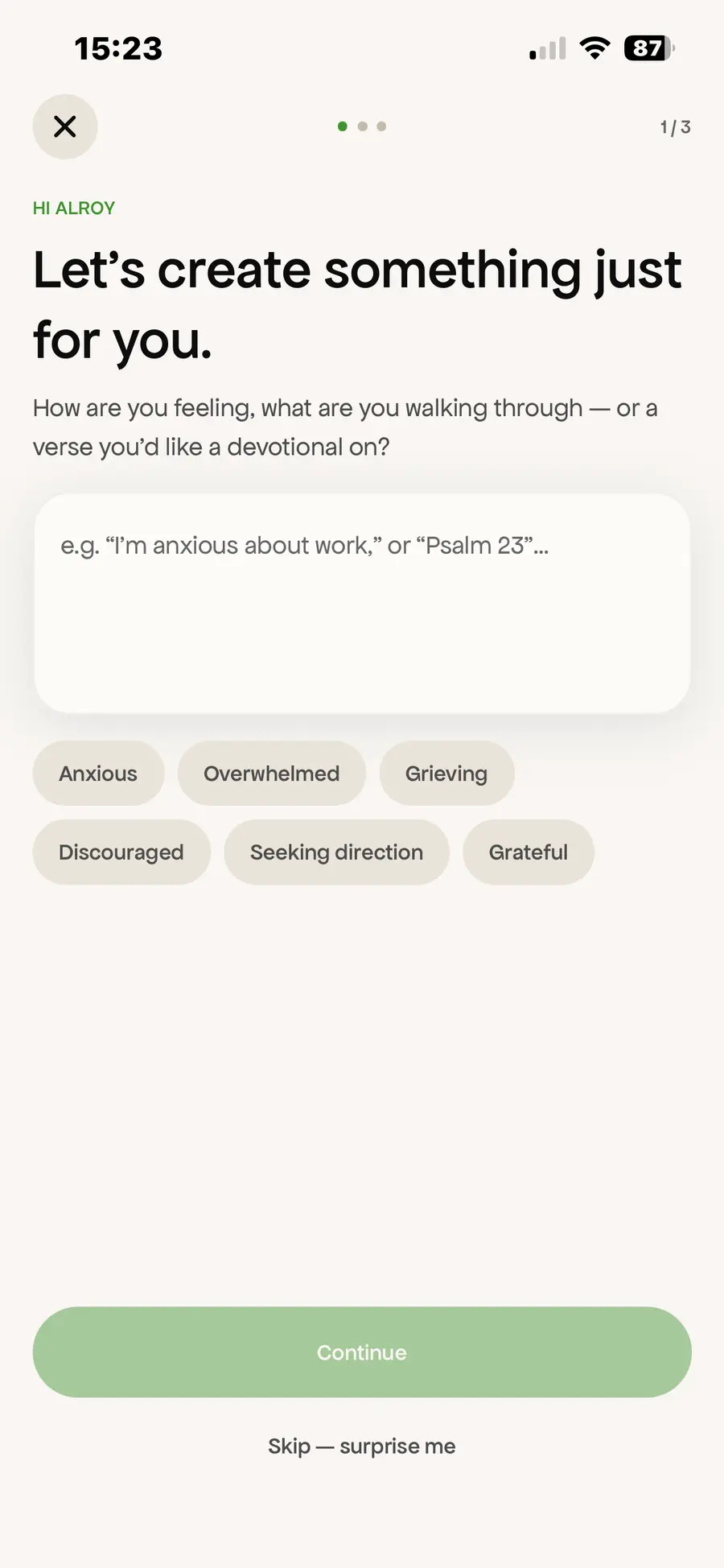
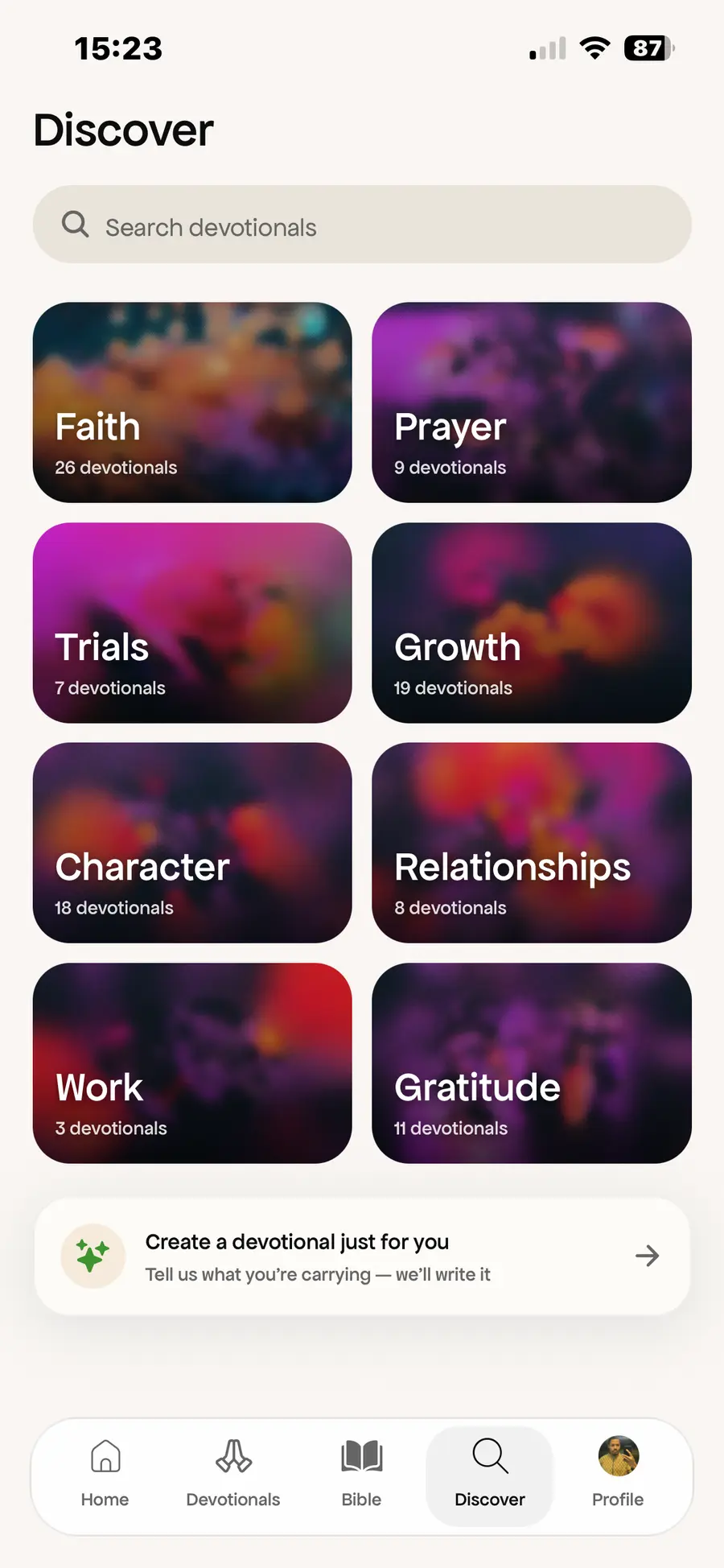
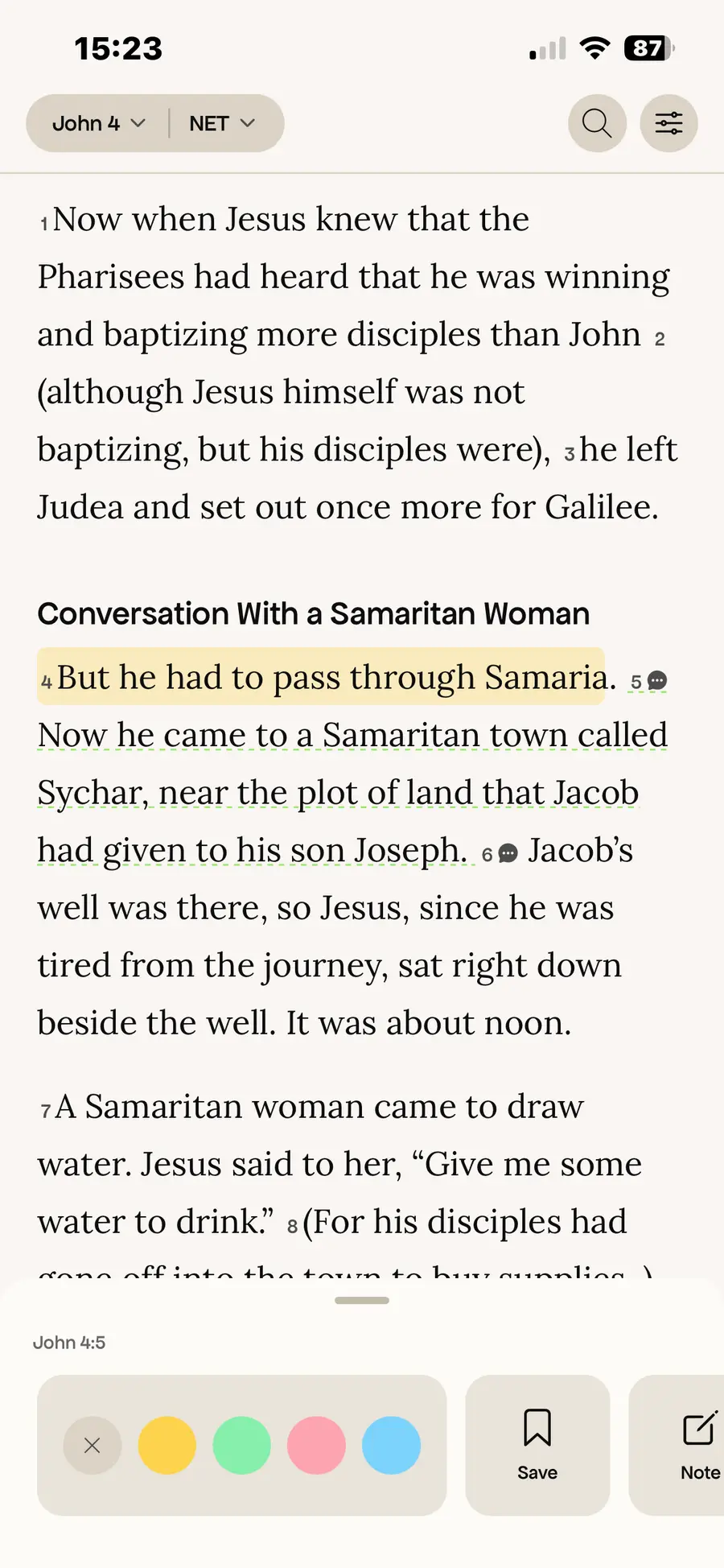
ISIT keeps everything worth keeping — a weekly devotional written by a person and meant to be read slowly, the whole Bible in the app, no algorithm, no ads — and adds the thing the format never had. You share what you are going through, and it writes a devotional for exactly that, in the moment you need it — rooted first and always in Scripture.
Personalisation with a safety net
Generated spiritual guidance is a higher-stakes writing task than most AI products ever face. The register has to carry spiritual authority without hallucinated certainty, which shaped every model decision: the generators run on the model that reviewers consistently rank first for restraint, coherence and emotional depth — because in this register, restraint is the feature and “creative risk” is the failure mode. A cheaper, edgier model was evaluated on the real prompt and turned down, twice.
And nothing generated reaches a reader unverified. Every tailored devotional passes through a fact-check that searches the live web to verify its claims before publication — a pass that deliberately costs several times more than the writing itself.
Where the AI effort goes
The share of machine effort behind one tailored devotional. Most AI products spend everything on generation; ISIT spends most of it making sure the generation told the truth.
| Stage | Share of effort | What changed |
|---|---|---|
| Writing | ~22% | The devotional itself, drafted from what you shared. |
| Verifying | ~77% | Live web-search fact-checking of every claim, before a reader ever sees it. |
| Reflecting | ~1% | The closing reflection pass. |
That ratio is a choice, and it sets the pricing question rather than following it: the verification pass is the one cost this product will not cut to protect a margin, so subscriptions are tuned around keeping it — the aim being an exchange that stays fair to the reader and sustainable for the business.
Care for the text
An app that quotes scripture carries a special obligation: the words on screen must be exactly what they claim to be. Three of the rules that came out of the build:
- Label + text
- Move together, alwaysA verse's translation label is only ever updated when its text was actually re-fetched in that translation. The bug this rule killed: a failed fetch publishing NKJV wording tagged “NET” — a lie a reader can never detect.
- Device date
- Not the server's, not UTCThe daily verse broke three times by rolling over on UTC midnight instead of the reader's own — showing tomorrow's verse at 1am. Now a hard rule with the reproduction documented.
- No italics
- In scripture passagesRetired across the app: emphasis the original text does not carry is editorialising. The passage is presented as written.
Design follows the same discipline — the devotional hero is bottom-anchored and ratio-sized, the type system is two families rather than three, and generated devotionals draw from a closed, server-enforced set of themes rather than whatever a model invents.
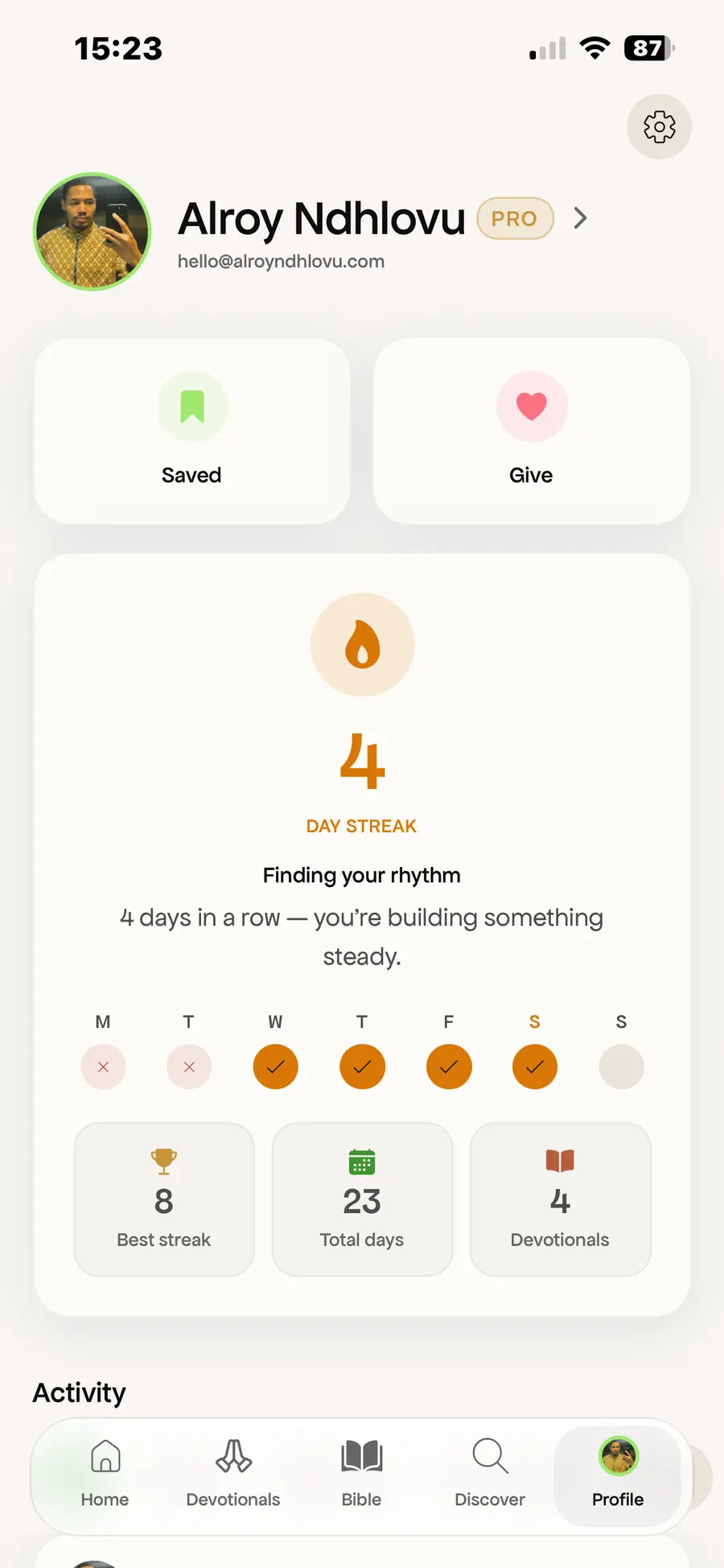
The screens

What I'd do differently
Define “today” on day one. The daily verse rolled over on UTC midnight instead of the reader's own clock, and that one wrong assumption shipped three separate times before it became a written rule with the reproduction documented. Any app with daily content should decide whose midnight it honours before writing the first query.
And I would measure the cost of honesty before pricing it, not after. The fact-check pass turned out to dominate the machine cost of a tailored devotional — several times the writing itself — which was the right design but was discovered after the subscription price was set, forcing the sums to be redone in the open. Instrument first, price second.