

Let’s be honest. We all think our ideas are brilliant. To you, that new SaaS platform or artisanal service is the best thing in the world. To the rest of the market? Maybe not so much.
I see this constantly in the product/service space. Passionate entrepreneurs fall in love with their solution (I have committed this very crime as well) rather than falling in love with the desire to solve the problem.
If you want to survive the brutal reality of the product life cycle, you need to detach your ego from the build. Whether you are a solo founder or a product owner at a scaling enterprise, the physics of product management remain the same: Validate, Build, Test, Ship, Refine.
Here is how to navigate the product management lifecycle without bankrupting your business (or your sanity)— especially if you are bootstrapping.
1. The Problem: Does Anyone Actually Care? (Validation)
Before you write a single line of code or draft a marketing plan, you need to answer one question: Does this solve a genuine pain point?
Too many founders skip this step because they are afraid the answer might be “no.” As Dan Olsen notes in The Lean Product Playbook, you have to achieve “Product-Market Fit.” This means being comfortable with being wrong.
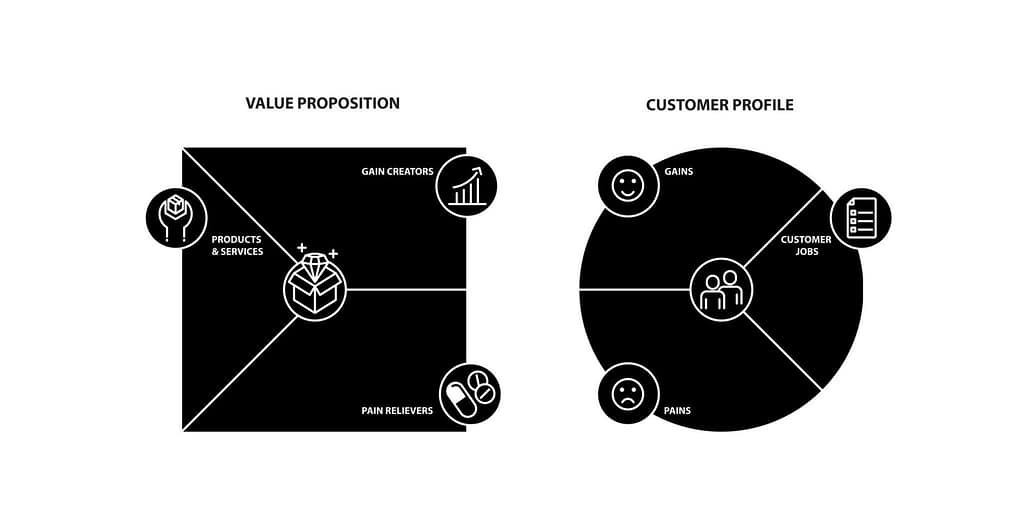
The Reality Check:
- Detach yourself: Your product is a tool, not your identity. If the market says they don’t need a Wi-Fi-enabled toaster, don’t build the toaster.
- Identify the demand: Are people currently hacking together a solution to this problem? If they aren’t trying to solve it already, it might not be a big enough problem to pay for.
Food for thought: If you have to spend 20 minutes explaining why someone has a problem, you don’t have a product; you have a philosophy lecture.
2. The Build: Building for the Customer, Not Yourself
Once you’ve confirmed the problem exists, you move to the solution space. This is where Don Norman’s principles from The Design of Everyday Things become your bible. A product must be discoverable and understandable.
If a user needs a manual to perform the primary function of your app, you have failed.
Who is this for? You need to know your user avatars intimately. What keeps them buying? Usually, it’s not “more features.” It is ease and reliability.
- Design for friction reduction: How many clicks does it take to get value?
- The emotional payoff: How does the user feel after using your product? Relieved? Smarter? Efficient?
If you lack the in-house talent to map out these user journeys, you need to upskill your team immediately. Understanding UX isn’t just for designers; it’s a survival skill for entrepreneurs. (Shameless plug: Check out the UX/UI courses at Skillapreneur if you want to stop guessing and start designing properly).
3. The Test: Get Out of the Building
You cannot test your product inside a vacuum, and you definitely cannot test it on your supportive mother. She loves you; she will lie to you.
You need Quantitative and Qualitative data.
- The MVP (Minimum Viable Product): Build the smallest version of the product that delivers value.
- Beta Testing: Get it into the hands of strangers. Watch them use it. Do they get stuck? Do they rage-quit?
- Feedback Loops: If 10 users tell you the “Save” button is hard to find, don’t argue that it’s “aesthetically placed.” Move the button!
4. Ship It! (Logistics and Systems)
Congratulations, you have a product. Now comes the hard part: The Go-To-Market (GTM) strategy.
Shipping isn’t just hitting “publish.” It is the orchestration of logistics, marketing, and systems. You can have the best product in the world, but if your CRM is a mess, your customer support is non-existent, and your marketing is generic, you will fail.
The “Ship It” Checklist:
- CRM & Processes: How are you tracking leads? If you’re using spreadsheets in 2025, we need to talk.
- Marketing: You need to be where your customers are. SEO, Google Ads, Content Strategy—this engine needs to run before the product launches.
- Support: Who answers the emails when things break? (And things will break).
Pro Tip: This is usually where technical founders stumble. They love the code but hate the sales. If that’s you, bring in experts. My expertise at Dejamedia Company handles exactly this—getting you a team that will turn a quiet launch into a loud, profitable one through data-driven business tech consulting.
5. Refine: The Cycle Never Ends
The biggest lie in product management is the word “Done.”
A software product is never done. A n idea can always be expanded. A service is never perfected. Look at the Product Life Cycle graph. Eventually, every product hits maturity and decline.
To stay in the “Growth” or “Maturity” phase, you must refine.
- Analyze the data: Look at churn rates. Why are people leaving?
- Iterate: Release updates based on user behavior, not just your roadmap.
- Pivot if necessary: Sometimes the market shifts. Be agile enough to shift with it.
Final Thoughts
Building a product is a messy, chaotic, beautiful process. It requires the humility to listen to the market and the arrogance to believe you can serve it better than anyone else.
Keep your processes tight, your ego low, and your focus on the customer.
So, I have to ask: Are you building a solution for a problem that actually exists, or are you just building a really expensive hobby?

I’m a full-stack digital marketing, business technology and branding strategy consultant. I help businesses grow by designing high-impact business solutions through data-driven marketing, analytics, automation, AI & creative strategy. With over a decade of experience in digital marketing, branding, media and content development, as well as business optimization and automation technologies, I’ve worked with a wide range of brands and organizations—like Meta, Total Sports, Jenna Clifford, the IFC, Energy Capital & Power, African Agri Council, and more—to boost their visibility, strengthen their brand presence, and drive profitability through data-driven, audience-focused solutions. I’m passionate about my work and bring a unique blend of creativity and dedication to every project I take on.